
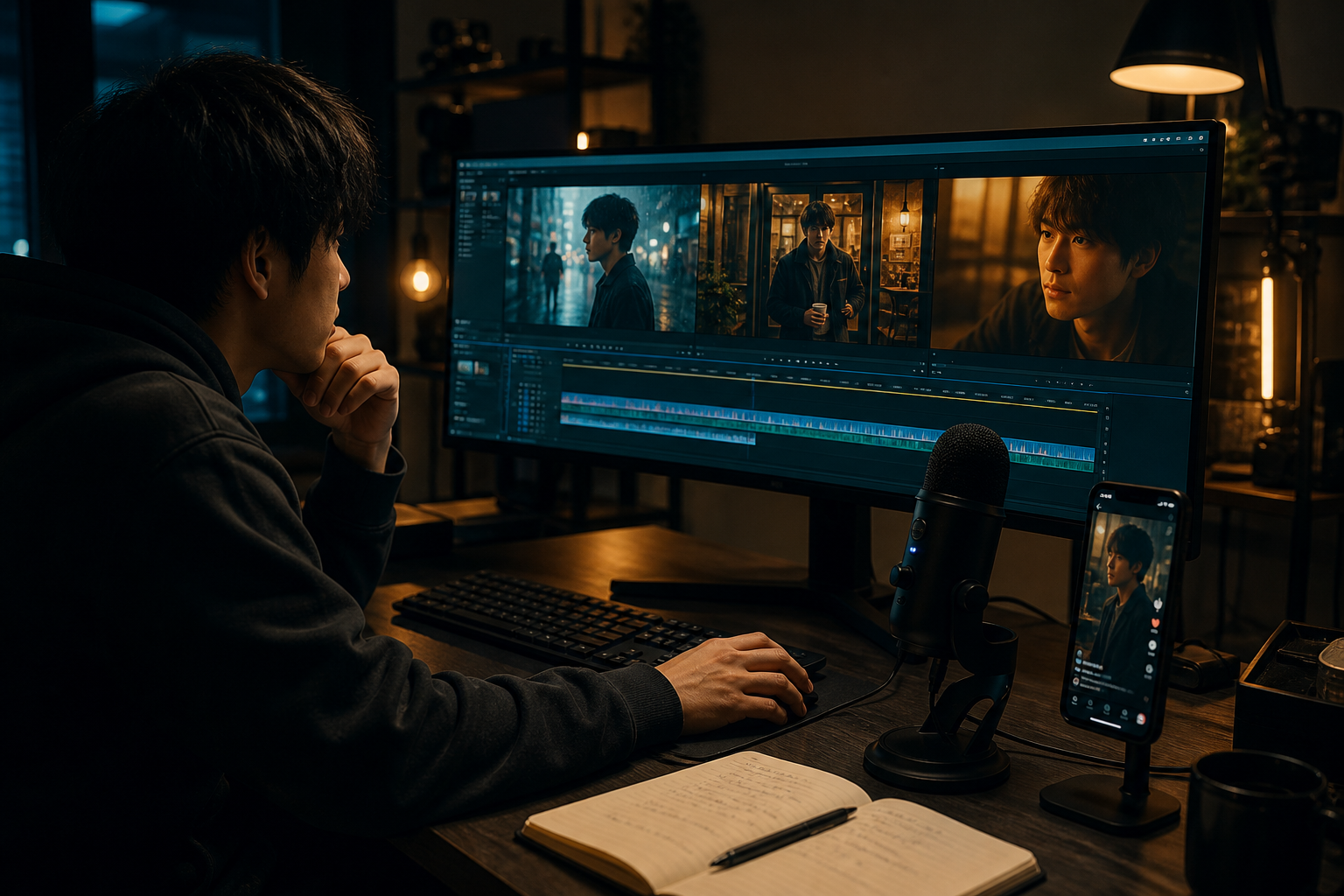
Creators searching “Seedance YouTube,” “Seedance 2.0 long-form,” or “Seedance AI YouTube finish” can usually land short shots—but stall on channel assets: idents that don’t match, chapters that jump style, talking-head that won’t lock to B-roll, and 16:9 frames that look like verticals cropped hard. This guide puts Seedance, Seedance 2.0, and Seedance 2.5 into a YouTube workflow—from channel identity to chapter QA—so you get fewer “new face every episode, new look every chapter, no memorable outro.”
Related hubs: Seedance 2.0 · Seedance 2.5 · AI Video Generator · Short-Form Marketing Guide · What Is Seedance
Why “Seedance YouTube” is a high-intent query
Short-form fits hooks and offer tests; YouTube needs subscribe-worthy series assets: a stable ident, jumpable chapters, a talking-head spine, and picture evidence in sync. Seedance 2.0 director-level control, multimodal references, and native audio-video sync let you write “every episode looks like the same channel” as an executable spec—instead of reinventing the look each upload. Turning search intent into reusable channel systems lifts finish retention under Seedance 2.0 / Seedance 2.5 queries more than repeating “cinematic.”
- Reusable assets: ident, transitions, and end-card CTA can share one Seedance template set
- Readable chapters: generate long-form B-roll by chapter, pair with timestamps so viewers jump without getting lost
- Clear upgrade path: lock channel specs on 2.0 first, then evaluate Seedance 2.5 for longer continuous chapters
YouTube finishes vs feed shorts: do not reuse the same prompts
Feeds want a 3-second hook, vertical, and a loop; YouTube wants the first 15 seconds to establish “which channel this is + what this episode answers,” with a 16:9 safe zone that leaves room for titles and chapter bars. Stretching a short-form prompt straight to landscape often pins the subject to the edge, crops the ident Logo, and floods the talking-head subtitle band. Keep short-form rhythm in the short-form marketing guide; this article only covers YouTube series assets.
- Aspect: prefer 16:9; give Shorts its own template—do not share composition lines with the main film
- Open: channel identity (Logo / locked camera move / locked sonic ident) before the offer explodes
- Structure: ident → question promise → chapter evidence shots → close CTA—not a single-hook loop
- Sound: keep the talking-head track clear; use bed music and accents on B-roll; avoid a new music style every chapter
Seedance 2.0 YouTube: three layers of channel writing
Layer 1: channel identity anchors (required)
Open every prompt by repeating the same identifiers: host hair and wardrobe, desk key light, ident color board, Logo placement. Without anchor lines, Seedance 2.0 may deliver “same channel vibe, ident that never matches.” Store anchors as a copyable prefix instead of rewriting “premium, cinematic” every episode. To hold on-camera faces, see the character consistency guide.
Layer 2: shot duty and chapter bridges (strongly recommended)
- State this segment’s duty: ident / talking-head establish / chapter B-roll / demo close-up / end CTA (one primary duty only)
- Write bridge cues: previous chapter’s end object, next chapter’s open object, host eyeline, subtitle safe zone
- Let camera serve duty: slow dolly in for the ident, lateral to establish a chapter, locked or micro-push for evidence close-ups (see the camera movement guide)
Layer 3: audio specs and delivery aspect (must-have for YouTube)
Set one master sonic ident for the whole channel (short ident + low bass bed) and only add or drop “short accents” per chapter—do not change the track every chapter. Seedance native sync is built to align keyboard clicks, page turns, and product unboxings with on-screen action; writing notes live in the audio sync guide. Also unify 16:9, a 3–5s ident, and 6–12s B-roll per chapter so chapter timestamps line up on the edit timeline.
A repeatable Seedance YouTube workflow (6 steps)
- Write a channel spec card: ident sonic mark, color board, host/product anchors, 16:9 safe zone (subtitles and end-card subscribe button)
- Split one episode into 4–8 chapter titles, each answering one question a viewer can jump to
- Generate 1 ident and 1 outro on Seedance 2.0 first; once locked, do not re-roll them every episode
- Generate B-roll chapter by chapter: change only “duty + action + camera,” never the channel anchors; use Fast to test composition
- After the talking-head cut, lay B-roll on timestamps and QA whether face, color board, and left/right framing still look like the same channel
- Batch only after the series template is stable; upgrade to Seedance 2.5 when you need longer continuous demos or fewer cut points
YouTube finish acceptance checklist
- Can the first 5 seconds still name which channel this is (ident, sonic mark, color board)?
- Does the 16:9 safe zone leave room for titles and subtitles, without the subject pinned to the edge or cropped?
- Are adjacent chapter B-rolls still the same host / same product (no face swap, no SKU drift)?
- Does the picture give evidence for the talking-head’s promised question—not empty mood shots?
- Does the outro carry a memorable CTA (subscribe, next-episode chapter, locked gesture) instead of a hard cut to black?
Four high-yield Seedance 2.0 YouTube templates
- Tech-review ident: “Same dark desk, cool-white key light, silver laptop; camera slowly dollies in to a keyboard close-up, Logo safe zone bottom-right; short electronic ident, landscape 16:9, 4 seconds.”
- Explain-chapter B-roll: “Same black-haired instructor, beige sweater; whiteboard mid-shot lecture, cut to chart close-up then back to the instructor; locked camera with a micro-push, talking-head lead with a light bed, 8–10 seconds per beat.”
- Unbox-demo chapter: “Strictly the same product packaging; two hands open, lift, rotate for display, then a feature close-up; warm commercial light, short tactile SFX, 16:9, insertable in talking-head gaps.”
- Subscribe-close outro: “Return to the ident’s same empty desk, host enters and waves, slow push to the desktop Logo; sonic ident returns, landscape, 3–5 seconds, used as the locked ending every episode.”
How to pick a YouTube strategy by scenario
- Talking-head + evidence channels (reviews/tutorials): lock the ident, then generate only evidence B-roll per chapter; layer consistency flows when faces must hold
- Narrative channels: break chapters by cause and effect; connect to the multi-shot storytelling guide
- Product/brand channels: freeze product anchors, keep demo chapters few and precise; connect to the ecommerce product video guide
- Need one longer continuous demo: prove chapter logic on 2.0, then evaluate Seedance 2.5 to reduce splice feel
When does YouTube long-form need Seedance 2.5?
Most channel idents, outros, and 6–12s B-roll per chapter are a better fit on Seedance 2.0 (including Fast composition tests and Mini chapter batches). Move a validated chapter template to Seedance 2.5 when you need a near-30-second continuous demo, parallel multimodal references (live talking-head reference + product still + camera-move reference), or less “splice many clips → re-align audio-video” overhead.
- A single pass needs a longer continuous take, with host and product turning multiple times inside one segment
- A complex ident constrained at once by look + camera-move reference + sonic ident
- A brand main channel that requires higher resolution and fewer visible edit points
See version differences in the 2.0 vs 2.5 comparison and the Seedance 2.5 product page. Rule: prove channel anchors and chapter duties on 2.0 first, then upgrade for duration and continuity—do not burn 2.5 on every ident experiment.
Common YouTube finish failure modes
- No channel spec card, so every episode re-rolls the ident and subscribe recognition fails
- Dropping a vertical short-form prompt straight onto 16:9, pinning the subject and flooding the subtitle band
- Rewriting person/product descriptions every chapter so anchors drift into face swaps or packaging swaps
- B-roll that is only mood empty shots while the talking-head explains steps with no picture evidence
- Changing sonic ident and bed music every chapter so the cut feels like channel surfing
Further reading
- Beginner workflow: How to use Seedance 2.0
- Prompt deep dive: Prompt engineering guide
- Text-to-video chapters: Text-to-video guide
- Image-to-video B-roll: Image-to-video guide
Conclusion
Using Seedance 2.0 on YouTube is not about “flashier every episode”—it is about a reusable channel production line: spec card first, ident and outro locked, one duty per chapter, and a 16:9 safe zone plus checklist that keep you looking like the same channel. Lock ident and chapter templates on Seedance 2.0, then upgrade to Seedance 2.5 when longer continuous demos are required. When ready, open Seedance 2.0 and start your next episode of AI video from one channel spec card.