
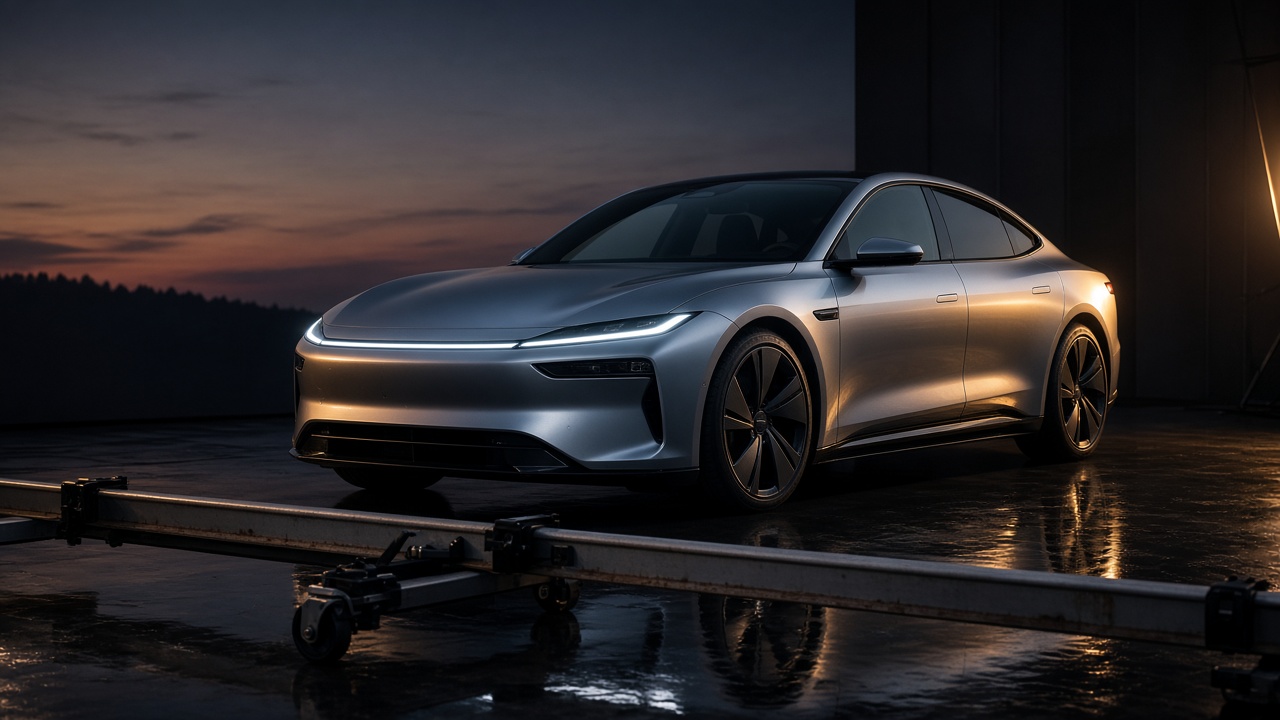
OEMs, dealers, and content teams searching “Seedance automotive video,” “Seedance 2.0 vehicle finish,” or “Seedance AI test drive” usually do not lack a spec sheet—they lack reusable viewing assets: paint swaps color, wheels swap style, lighting swings cold then warm, and the reshoot cost of every trim is too high. This article puts Seedance, Seedance 2.0, and Seedance 2.5 into the automotive showcase workflow—from walkaround step splits to chapter QA—reducing “new color every trim, new method every shot, customers still cannot match the real car after watching.”
Related hubs: Seedance 2.0 · Seedance 2.5 · AI Video Generator · Ecommerce Product Video Guide · What Is Seedance
Why “Seedance automotive showcase video” is a high-frequency search term
Mood films can just look good; a vehicle needs a checkable identity: the same paint, the same walkaround, the same lighting cluster. Seedance 2.0 director-level control, multimodal references, and native audio-video sync let you write “front fascia turns right into the side” as an acceptable spec, instead of reinventing the cruise method for every trim. Turning search intent into “a vehicle you can re-watch” lifts finish pass rates under Seedance 2.0 / Seedance 2.5 queries more than shouting “more luxurious.”
- The path is jumpable: one chapter completes one viewing goal, so timestamps and the configurator table align
- The vehicle is identifiable: paint code, wheel style, and lighting-cluster shape have cross-shot checkpoints
- Clear upgrade path: lock a 6–12 second walkaround template on 2.0 first, then evaluate Seedance 2.5 for longer continuous cruising
Automotive finish vs ecommerce product film: do not reuse the same prompts
Ecommerce product films must manage desktop rotation and selling-point close-ups; cars still have to manage “body proportions, ground reflection, how the door opens.” Dropping a product-turntable prompt and adding “film a car” usually fails as the camera orbits while the vehicle shrinks into a scale model. Accessory close-ups can still follow the ecommerce product video guide; this article only covers publishable walkaround finish you can actually run as ads.
- One chapter, one body zone: never stack front fascia, side, and interior as three verbs in the same shot
- Establish before you enter: full-vehicle overview before cabin push-in, so viewers are not left not knowing where to look
- Keep the light steady: reuse showroom color temperature, ground reflection, and time of day across chapters, reducing the “we swapped weather” illusion
- Proportion air: wheelbase and height must not be exaggerated by a wide angle; toy-like shots get discarded on their own
Seedance 2.0 automotive video: three layers of writing
Layer 1: paint and spec anchors (required)
Open every prompt by repeating the same identifiers: paint code, wheel style, lighting-cluster shape, badge position, interior stitching. Without anchor lines, Seedance 2.0 may deliver “looks like the same vehicle, but the spec swapped a generation.” Write showcase prohibitions (no wrong model year, no invented kits) as a copyable prefix. To hold exterior look, use the anchor approach in the character consistency guide—only swap “face” for “vehicle identity.”
Layer 2: walkaround duty and transitions (strongly recommended)
- State this chapter’s duty: establish the full vehicle / complete one walkaround segment / accept the lighting cluster / close on the cabin (one primary only)
- Write transition cues: previous chapter’s end door gap, next chapter’s open wheel arch, left vs right side, ground-reflection focal point
- Let camera serve the path: establish shot slow orbit, side shot stable follow, accept shot locked or micro-push (detail in the camera movement guide)
Layer 3: vocal track and delivery specs (must-have for vehicles)
Set one clean explainer track for the whole vehicle (a very light engine bed is allowed), align door, lock, and turn-signal sounds with the action, and do not change reverb every shot. Seedance native audio-video sync is built to land the “click” on the same beat as the door lock; writing is in the audio sync guide. Also unify 16:9 (homepage) or 9:16 (feed), 6–12 seconds per chapter, and a subtitle safe zone so vehicle pages can slice by timestamp.
A repeatable Seedance automotive workflow (6 steps)
- Split the viewing path into 4–8 body-zone chapters (one checkable goal per chapter); do not write vague “make it look luxurious”
- Freeze the paint and spec anchor prefix (paint code + wheels + lighting cluster); every chapter shares it
- Run the front-fascia sketch on Seedance 2.0 (or Fast) and confirm proportions and the badge are readable
- Generate chapter by chapter: change only “duty + path + camera,” never paint or wheels
- Check against the vehicle acceptance list: paint code, model year, lighting cluster, whether picture and sound stay continuous
- Once the template is stable, batch-swap dialogue/language; upgrade to Seedance 2.5 when you need longer continuous cruising
Automotive showcase video acceptance checklist
- Are two adjacent chapters still the same vehicle and the same paint code (no color swap, no wheel swap)
- Does each timestamp map to only one viewing action, rather than stacked showmanship aerials
- Do walkaround and door-open let viewers see “where they look, which way they turn”
- Are model year and kits consistent with the real spec, with no invented body kit or spoiler
- Does the explainer land on the same beat as the path, with no “mouth on the cabin, camera still on the front fascia”
Four high-yield Seedance 2.0 automotive templates
- Showroom walkaround: “Same deep-space-gray paint and the same multi-spoke wheels; ① full-vehicle establish; ② side push-in; ③ lighting-cluster accept; ④ rear close; cool-white showroom light, short lock SFX, landscape 16:9.”
- New-vehicle launch: “Strictly the same pearl-white body; ① front-fascia establish; ② DRL close-up; ③ grille detail; ④ side overview close; stage spotlight, cue SFX aligned, 8 seconds per chapter.”
- Dealer inventory film: “Same in-stock vehicle and the same store floor tile; ① doorway establish; ② walkaround path; ③ interior close-up; ④ key close; no invented options, locked camera.”
- Multi-spec batch listing: “Same brand palette; ① exterior establish; ② wheels; ③ cabin; ④ tail-lamp close; light bed, jumpable chapters, easy vehicle-page slicing.”
How to pick an automotive strategy by scenario
- Showroom in-stock car: freeze paint anchors, keep walkaround shots few and precise; accessory close-ups can connect to the ecommerce product video guide
- Driven by live photos: lock official stills and on-site photos first, then image-to-video; detail in the image-to-video guide
- Brand hero atmosphere: split chapters by mood; connect to the brand commercial guide
- Need one longer continuous-cruise take: prove step-by-step logic on 2.0, then evaluate Seedance 2.5 to reduce cut-across-zones splice feel
When does a long automotive cruise need Seedance 2.5?
Most 6–12 second single chapters, inventory batches, and vehicle-page slices are a better fit on Seedance 2.0 (including Fast composition tests and Mini batch language swaps). Move a validated walkaround template to Seedance 2.5 when you need a near-20–30-second continuous orbit, parallel multimodal references (official still + in-stock photo + explainer track), or less “cut every body zone → re-align picture and sound” publish cost.
- A single pass needs a longer continuous shot, with paint and lighting turning several times inside the same take
- A complex cruise constrained at once by picture style + real vehicle reference + explainer ident
- A flagship launch that requires higher resolution and fewer visible edit points
See version differences in the 2.0 vs 2.5 comparison and the Seedance 2.5 product page. Rule: prove walkaround splits and paint anchors on 2.0 first, then upgrade for duration and continuity—do not burn 2.5 on every vehicle experiment.
Common automotive-finish failure modes
- No body-zone verb list, so three chapters all “show luxury” with no checkable vehicle
- Rewriting the paint description every chapter, so anchors drift into color or wheel swaps
- Stacking front fascia, side, and interior in the same shot, so viewers cannot pause on a single body zone
- Empty hero shots only, no door-open path, so it looks flashy but cannot match the real car
- Bed music too loud or reverb changed every chapter, so the string feels like an ad-spot reel rather than one vehicle
Further reading
- Beginner workflow: How to use Seedance 2.0
- Prompt deep dive: Prompt engineering guide
- Text-to-video to lock the path: Text-to-video guide
- Batch language swaps: API batch production guide
Conclusion
Using Seedance 2.0 on automotive showcase is not about “more flash every trim”—it is a reusable viewing production line: verb list first, paint and spec anchors frozen, one body zone per chapter, with picture-sound and an acceptance list so it still feels like the same vehicle. Lock a 6–12 second walkaround template on Seedance 2.0, then upgrade to Seedance 2.5 when longer continuous cruising is required. When ready, open Seedance 2.0 and start your next AI vehicle film from one four-line viewing path.